Day collar vs play collar: the difference, plainly explained
A day collar is a discreet, comfortable piece worn openly in daily life, often passing as ordinary jewellery. A play collar is a heavier, more obvious piece worn for scenes and often fitted with rings or a lock. Many people own both, because they do genuinely different jobs.
A day collar and a play collar answer two different questions. One asks how to carry a bond through ordinary life without announcing it. The other asks how to mark and equip a piece for time set aside together. The same person often wants both, because a single collar rarely does both jobs well.
Keeping the two ideas separate saves a lot of confusion and a little money. Buy for the job in front of you, rather than for a vague sense that a collar ought to be able to do everything at once.
What a day collar is for
A day collar is made to be worn openly, at work, at the shops, anywhere, without drawing a second glance. It tends to be slim and understated. A fine chain, a plain leather band, or a discreet locking piece styled like a necklace all qualify. The point is that it reads as ordinary jewellery to everyone except the two people who know better.
Because it lives against the skin all day, comfort and durability matter more than drama. The hardware is usually minimal. Our breakdown of day collars goes through the styles in detail, and the guide to wearing a discreet day collar covers keeping one private in ordinary company.
Material choice follows the same logic. A day collar in supple leather or fine metal sits quietly under a shirt collar, while anything stiff or wide tends to show. Because it is worn for hours at a stretch, the fit has to be right on the first try, since a piece that rubs at nine in the morning becomes unbearable by the afternoon.
What a play collar is for
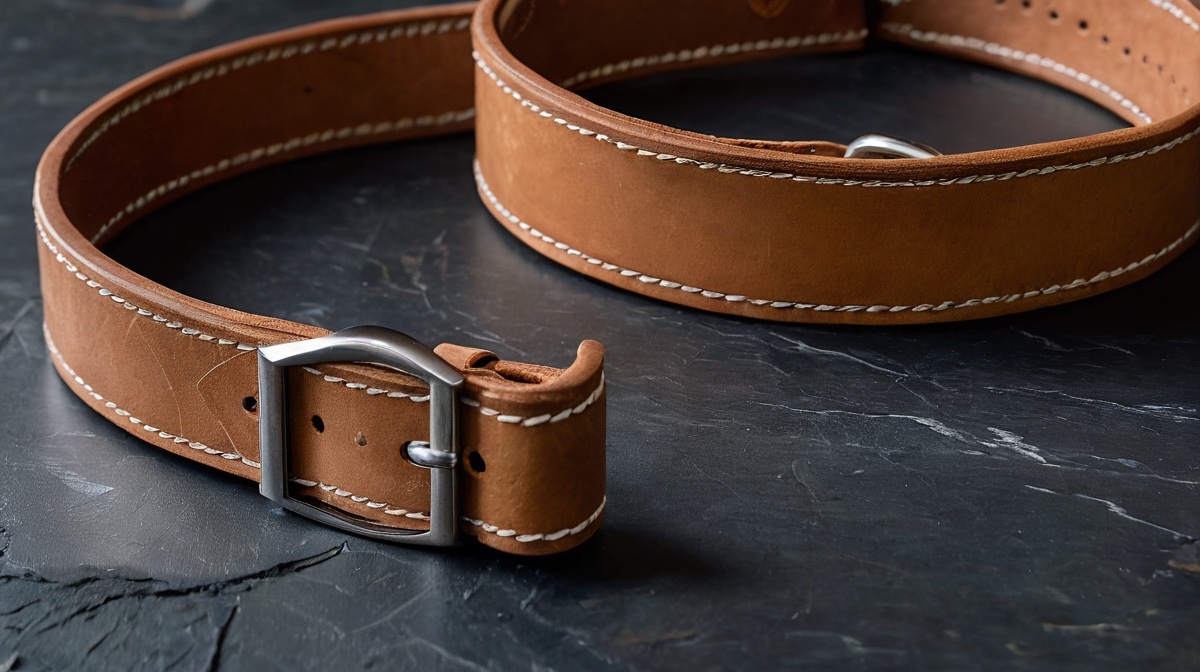
A play collar is worn for agreed time together and is not built to pass unnoticed. It is often wider, heavier, and fitted with attachment points such as D-rings or an O-ring. Some are made to lock. The look is deliberate, and so is the function.
Because it is more substantial, a play collar is a piece you put on for a scene and take off afterwards. Heavier styles, including bondage collars with several rings and locking collars that fasten shut, sit firmly in this category. They are made for intensity and presence, not for a full day at a desk.
The extra hardware also changes how you look after it. More rings and a lock mean more fittings to check before use and more metal to keep clean, a point our guide to collar hardware explained goes into. A play collar spends most of its life stored rather than worn, so somewhere safe to keep it, away from tangling with other gear, is part of owning one.
Comfort, hardware and safety differences
The differences are practical before they are symbolic. A day collar prizes lightness and a low profile. A play collar prizes strength and secure attachment points, which adds weight and bulk. Neither is better than the other; they are simply tuned for different uses.
Safety is where the distinction really bites. A heavy or locking play collar should never be left on an unattended or sleeping person, and anything that locks needs its key or release kept within immediate reach. For scenes, many people prefer a quick-release fastening so the collar can come off in a second. A day collar carries fewer risks because it is lighter, though the two-finger fit rule still applies. Our dedicated guide to collar safety covers all of this properly.
Do you need both?

Many people own one collar and are perfectly happy. If your relationship never involves heavier play, a single well-chosen day collar may be everything you want. If you do set aside time for scenes, a separate play collar keeps your everyday piece unmarked and lets each collar be right for its own job.
There is no rule that the two must match, or that owning both signals anything in particular. What a collar signifies is always settled between partners, a point we cover in what a collar means in BDSM. If you are weighing a first purchase, the full Catalog sets the types side by side so you can match the collar to the way you actually live and play, rather than to a picture that looks good online.
Questions people ask
Can one collar be both a day collar and a play collar?
Rarely well. A day collar prizes lightness and a low profile, while a play collar prizes strength and secure attachment points, which add weight and bulk. A single piece usually compromises on one job, which is why many people keep one of each.
Is a play collar safe to wear all day?
Generally no. Heavier and locking play collars are made for supervised, agreed use, not for a full day of ordinary life. They should never be left on an unattended or sleeping person, and anything that locks needs its key or release kept within immediate reach.
Which should I buy first?
Start with whichever matches how you will actually use a collar. If your relationship rarely involves heavier scenes, a well-chosen day collar may be all you need. If you do set aside time for play, a separate play collar keeps your everyday piece unmarked.
Take it past the page
Guides give you the shape of it. People give you the rest: how they chose, how it fits, what a collar came to mean for them. Find others who wear one and are happy to talk.
Find people who share it →