Locking collars: what the lock adds, and the safety it demands
A locking collar turns an ordinary piece into something that feels genuinely held, and it is a fine choice for play as long as a fast way out is always within reach.
Strengths
- The lock adds a real sense of being held that many people value
- Wide range from light symbolic locks to heavier secured designs
- Works for both short scenes and longer symbolic wear
- Often pairs a simple lock with comfortable, familiar materials
Trade-offs
- A lost key or jammed lock turns a fun piece into a problem
- Needs a strict quick-release habit for any restrictive play
- Cheap locks and rings can fail or corrode with sweat and time
A locking collar is a collar that fastens with a small lock or captive fitting so it cannot be slipped off casually. It is popular for the psychological weight of being locked in, and it suits play well as long as a key or quick-release stays within immediate reach and nobody is ever left in it unattended.
A locking collar is a collar that closes with a lock. A small padlock, a captive clasp, or a fitting that needs a key: the mechanism varies, but the effect is the same. Once it is on, it does not come off on a whim, and that small shift from fastened to locked is what people are really buying.
The lock is a light touch with a heavy meaning. It rarely restrains the body any more than a plain buckle would, yet it changes the experience completely for the person wearing it. That is the appeal, and it is also why a locking collar comes with one safety habit you cannot skip.
What the lock actually adds
The difference lives mostly in the head, and that is not a criticism. A locking collar seldom restrains you more than a buckled one. What changes is the knowledge that you cannot simply take it off, which many people find focuses the mind and deepens the sense of being held. A light symbolic lock can carry as much weight as a heavy one.
Because the effect is psychological, the lock does not need to be industrial to work. A modest, well made lock on a comfortable band often beats a bulky padlock that digs in. The Catalog treats the truly permanent version separately, since an eternity collar answers a different need from a lock you open at the end of a scene.
Who it suits
A locking collar suits people who like the idea of being secured and are happy to build a small safety habit around it. For light, symbolic wear it is beginner friendly. For anything restrictive, it moves into territory where the quick-release rule below is non-negotiable.
It is a natural next step for someone comfortable with a day or play collar who wants a stronger feeling of commitment during a scene. If you want that feeling without a mechanism to manage, a plain buckled bondage collar gives you presence without a key to worry about.
Materials, locks and hardware
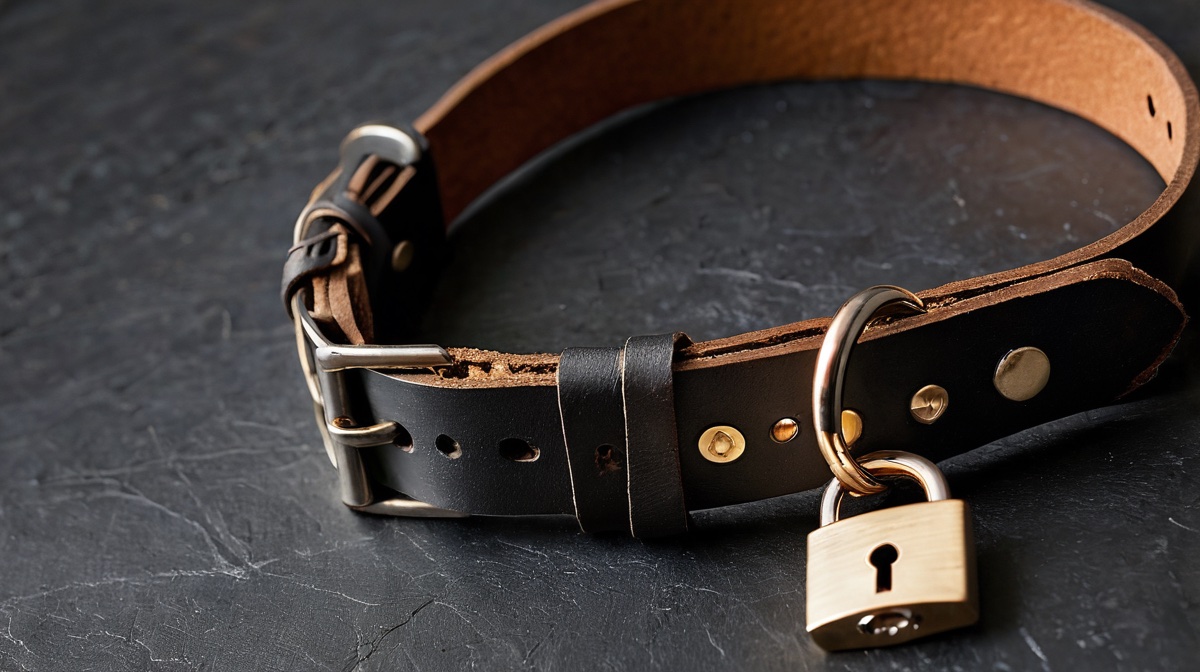
Most locking collars pair a familiar band, often leather, with a metal lock and ring. The band should be comfortable for the length of wear you have in mind. The hardware is where corners get cut, so look closely. A solid, welded ring will not open under tension, and a decent lock will survive sweat without seizing. Small brass or steel padlocks are the most common closures, and some collars hide the lock inside a clasp so the piece still reads as ordinary from a distance.
Cheap locks are the usual weak point. They jam, they rust, and they fail at the worst time. If a lock feels flimsy in your hand, it is flimsy on your neck. Nickel applies here too, so if your skin reacts to cheap metal, choose stainless steel or titanium fittings and check the seller states the material.
Fit and the quick-release rule

Fit follows the same firm standard as every other collar. Two fingers should slide between the band and your neck, with no pinching. Sizing a locked piece matters a little more, because you cannot loosen it once the key is away, so favour comfortable snugness over tight. The collar sizing and fit guide covers measuring properly.
The quick-release rule is the heart of using one safely. Keep the key, a spare, or bolt cutters within immediate reach the whole time the collar is locked. Never leave anyone alone while they are locked in, and never combine a lock with restrictive play unless getting out takes seconds. Test the release before you start. The collar safety guide spells this out, and it is worth reading before your first lock.
How to choose one
Decide first how restrictive you actually want the experience to be, then match the lock to it. Light and symbolic asks little of you. Heavier or restrictive asks for a rehearsed exit plan every single time. Buying links should be clear about the lock type and whether a quick-release is built in, and a design that offers a genuine fast release is worth paying for. Choose the band for comfort, the hardware for strength, and the lock for the feeling you want, in that order, and a locking collar becomes a rewarding piece rather than a risk.
Questions people ask
What is a locking collar?
It is a collar that closes with a lock or captive fastening so it will not come off without the key or a deliberate release. The point is the feeling of being secured rather than heavy restraint, which is why even a small, light lock can carry a lot of meaning.
Are locking collars safe for play?
Yes, with the right habits. Keep the key or a quick-release within arm's reach every time, never leave someone alone while they are locked in, and agree a clear signal for needing out. The lock is part of the appeal, so the way out has to be reliable and fast.
What happens if you lose the key?
Plan for it before it happens. Keep spare keys in a known place, and for anything heavier keep bolt cutters on hand as a backup. A cheap lock can also jam, so test the release before a scene rather than discovering a problem at the worst moment.
Weighing up this kind of collar?
Fit and feel are personal, and people who already wear this type will tell you the parts a description leaves out. Ask before you commit.
Find people who wear it →