Collar hardware explained: buckles, rings, locks and clasps
Collar hardware is the metal fittings on a collar: buckles and clasps that fasten it, D-rings and O-rings for attachment, and locks that hold it shut. Quality matters more than looks here, because cheap fittings fail first, and the metal choice also affects nickel allergy.
The hardware on a collar does the real work. The band gets the attention, but it is the buckle, the rings and the lock that fasten it, hold it and, in a play context, connect it to anything else. Cheap fittings are also the first thing to fail, often at the worst possible moment, so understanding them pays off.
This guide runs through the common pieces of hardware, what each is for, and how to tell solid fittings from flimsy ones before you spend any money.
Fasteners: buckles, clasps and locks
The fastener is how the collar closes, and there are three broad kinds. A buckle, like a belt, is adjustable, familiar and easy to use, which makes it the workhorse for leather collars. A clasp, styled like jewellery, suits discreet and everyday pieces where you want the fastening to disappear.
A lock turns a collar into something that cannot be casually removed. Small padlocks and integrated locks both appear, and they carry real symbolic weight as well as a practical function. They also carry a safety duty, since anything that locks must have its key or release close to hand at all times. Locking styles get their own treatment in our locking collars section, and the safety side sits in collar safety.
A quick-release fitting deserves a mention of its own. Some collars use a clasp or a panic snap designed to open in a single motion, which many people prefer for scenes so the collar can come off instantly if it has to. It trades a little of the permanence of a buckle or lock for speed, and for play that trade is often exactly the right one to make.
Attachment points: D-rings and O-rings
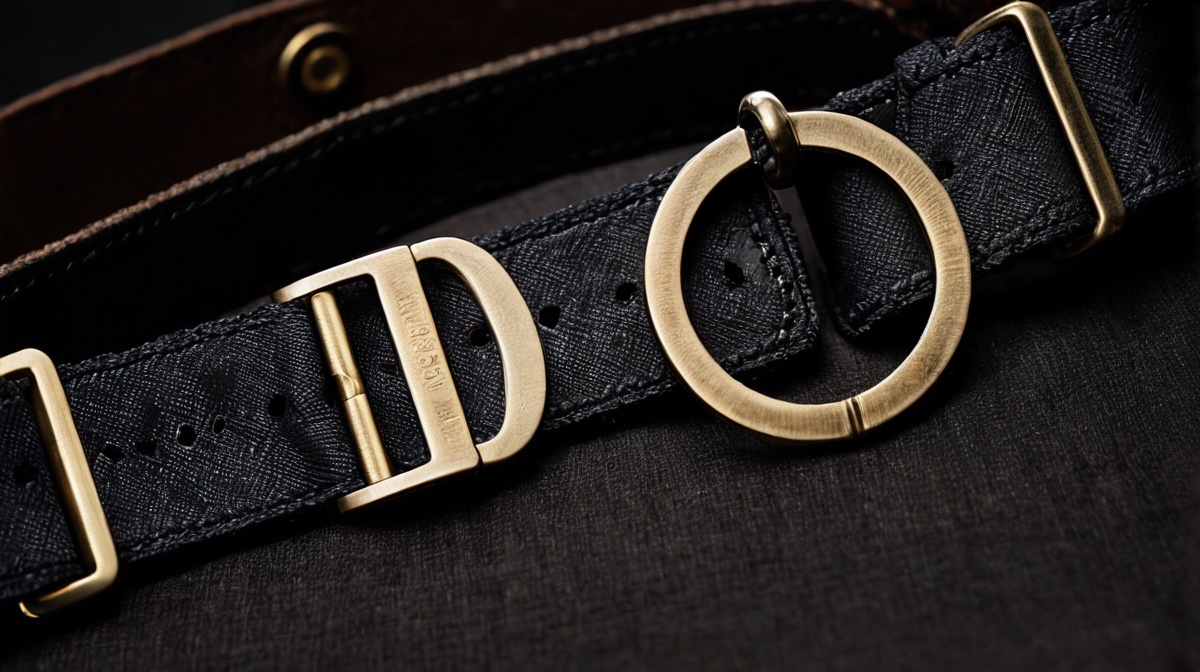
Rings are the attachment points, and their shape tells you the intended use. A single O-ring at the front is the classic focal point, versatile and neat. D-rings, flat on one side, sit close against the band and are common where a collar needs one or more fixing points.
Heavier collars carry more and sturdier rings. A wide bondage collar may have several welded rings placed around it, built to take load without bending or pulling loose. The key detail is how the ring attaches to the band. A ring that is merely glued or lightly stitched is a weak point, while a welded ring on a riveted fitting is far more trustworthy under strain.
Judging hardware quality
Good hardware feels solid and moves cleanly. A quality buckle has a firm, well-seated pin and no rough edges. A good ring is fully closed, ideally welded, with no gap you can prise open. Clasps should click home positively rather than feeling vague. Weight, within reason, is a fair rough guide, since solid fittings are not featherlight.
Look at how the hardware meets the material, because that join is where collars fail. Rivets generally outlast glue, and neat, dense stitching outlasts a few loose passes of thread. On leather especially, the fittings often wear before the band does, which is one reason we treat upkeep separately in caring for a leather collar.
Hardware also needs upkeep, not just inspection. Grit and sweat work into buckles and rings and wear them from the inside, so an occasional clean keeps them moving smoothly and lets you feel any looseness before it becomes a failure. A fitting that has started to bend, gape or stick has told you plainly that its working life is over, and it is cheaper to replace than to trust.
Metal, allergies and safety
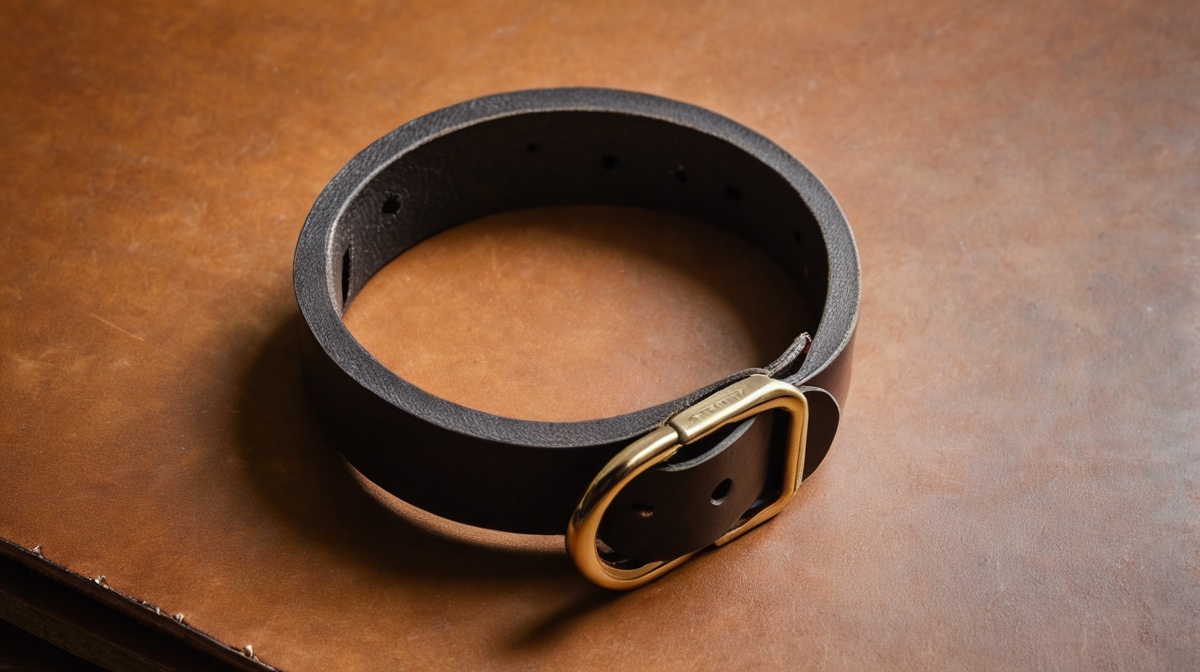
The metal itself is worth a thought. Solid brass, stainless steel and quality plated fittings all wear well, while cheap pot-metal fittings tarnish, bend and snap. On a piece worn against the skin, allergy matters: nickel is a common trigger, so if you or your partner react to metals, look for stainless steel or nickel-free fittings.
Finally, treat hardware as a safety item, not just a finish. Check fastenings before each use, keep a release or key within reach on anything that locks, and never leave someone unattended in a heavy or locked collar. The metal and material choices interact, too, which is why it helps to read this alongside leather vs steel collars and to browse the full Catalog with the fittings, not just the band, in mind.
Questions people ask
What is the difference between a D-ring and an O-ring?
Both are attachment points, and their shape hints at the use. An O-ring is a round ring, often a single focal point at the front, versatile and neat. A D-ring is flat on one side so it sits close against the band, and is common where a collar needs one or more fixing points.
How can I tell if collar hardware is good quality?
Good hardware feels solid and moves cleanly. A quality buckle has a firm, well-seated pin, and a good ring is fully closed, ideally welded, with no gap you can prise open. Look at how the fitting meets the band, since rivets outlast glue and dense stitching outlasts a few loose passes.
Does the metal matter for skin allergies?
Yes. Nickel is a common allergy trigger, and a collar sits against the skin. If you or your partner react to metals, look for stainless steel or nickel-free fittings. Solid brass, stainless steel and quality plated fittings all wear well, while cheap pot-metal bends and snaps.
Take it past the page
Guides give you the shape of it. People give you the rest: how they chose, how it fits, what a collar came to mean for them. Find others who wear one and are happy to talk.
Find people who share it →