Day collars: the discreet piece you can wear anywhere
For most people who want to wear a symbol every day, a day collar is the sweet spot: meaningful up close, invisible as jewellery from across a room, and comfortable enough to forget you have it on.
Strengths
- Discreet enough to pass as ordinary jewellery in any setting
- Comfortable for continuous wear when sized correctly
- Huge range of styles, from a plain chain to a subtle locking piece
- Carries real personal meaning without announcing itself
Trade-offs
- Cheaper metals can trigger nickel sensitivity with constant contact
- A truly locking day piece needs a plan for airports, doctors and emergencies
- The most discreet designs are often the priciest to make well
A day collar is a collar made for constant, low-key wear. It usually looks like normal jewellery, a fine chain, a plain band, or a piece with a small symbolic detail, so it can be worn in public without drawing attention. The best one is whichever is comfortable enough to wear all day and made from a metal your skin tolerates.
A day collar is a collar built for everyday life. The idea is quiet wear: a piece you can keep on at work, at the shops, or at a family lunch without anyone reading it as anything but jewellery. Up close, and to the person who gave it, it means a great deal. From a few steps away it is a fine chain or a plain band, and that gap between the private and the public meaning is the whole appeal.
Because it is worn for hours at a stretch, a day collar lives or dies on comfort and materials. A statement piece can be heavy and dramatic for one evening. A day collar has to disappear into your routine, which raises the bar on fit and on the metal against your skin.
Common forms
The day collar covers a wide range of styles. At the plainest end is a simple chain, sometimes with a small clasp or ring that carries the meaning. Some people wear a discreet band in steel or leather. Others choose a piece with a subtle detail, a single bead, a small pendant, or a design element that only makes sense to those who know.
A popular middle ground is a piece that looks fixed but is not truly locked, or one with a low-key locking clasp. This gives the feel of a permanent collar with the practicality of something you can take off when you need to. The Catalog covers the more formal and play-focused types separately, since those answer different needs.
Sizing for all-day wear
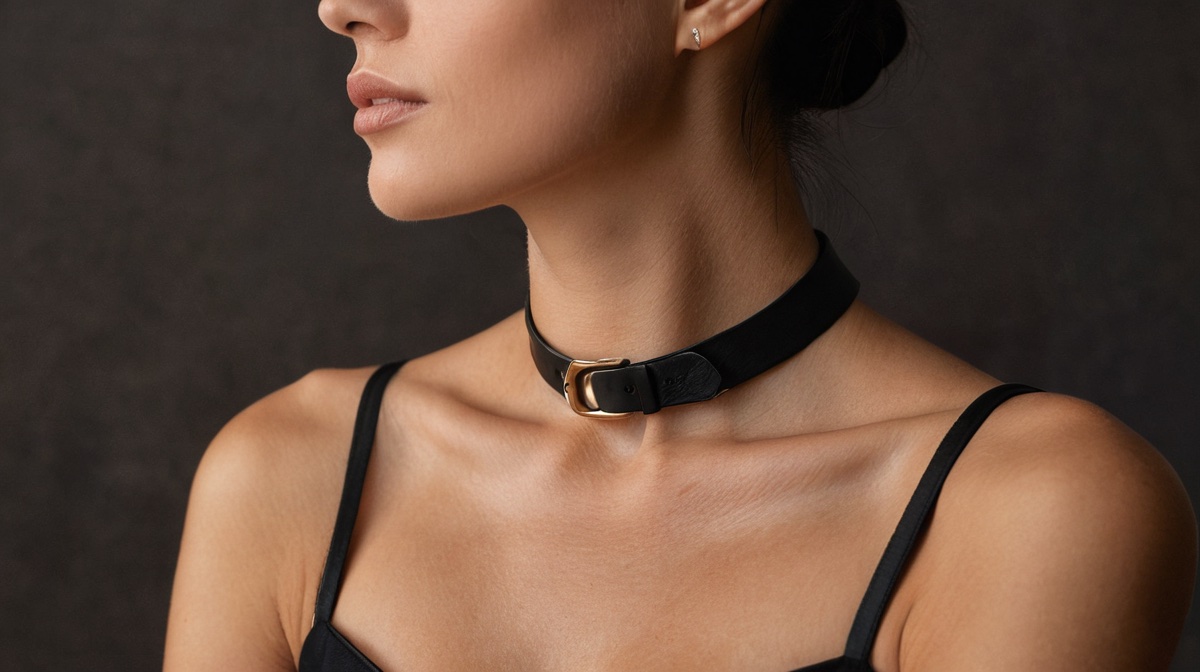
Fit is where most day-collar regret comes from. Too tight and it rubs and marks over a long day. Too loose and it shifts, catches on clothing, and sits wrong. The target is comfortable snugness: you should be able to slide two fingers between the band and your neck without a struggle.
Measure at the base of the neck where the collar will actually rest, and remember that necks change slightly through the day and with temperature. If you are between sizes, favour the slightly looser option. A day collar you stop wearing because it pinches is doing nobody any good.
Materials and skin
Constant contact is hard on cheap metal. The most common problem is nickel, which sits in many inexpensive alloys and can cause redness, itching or a rash where it touches skin all day. If you know you react to costume jewellery, look for surgical stainless steel, titanium, solid sterling silver, or good quality gold, and check the seller states the material plainly.
Leather is a lovely option for a softer day piece, though it needs a little care. Keep it dry where you can, condition it occasionally, and give the skin underneath a break if it ever feels damp or irritated. For any material, clean the collar now and then, since something worn all day picks up oils and grime whether you notice or not.
Living with a locked piece
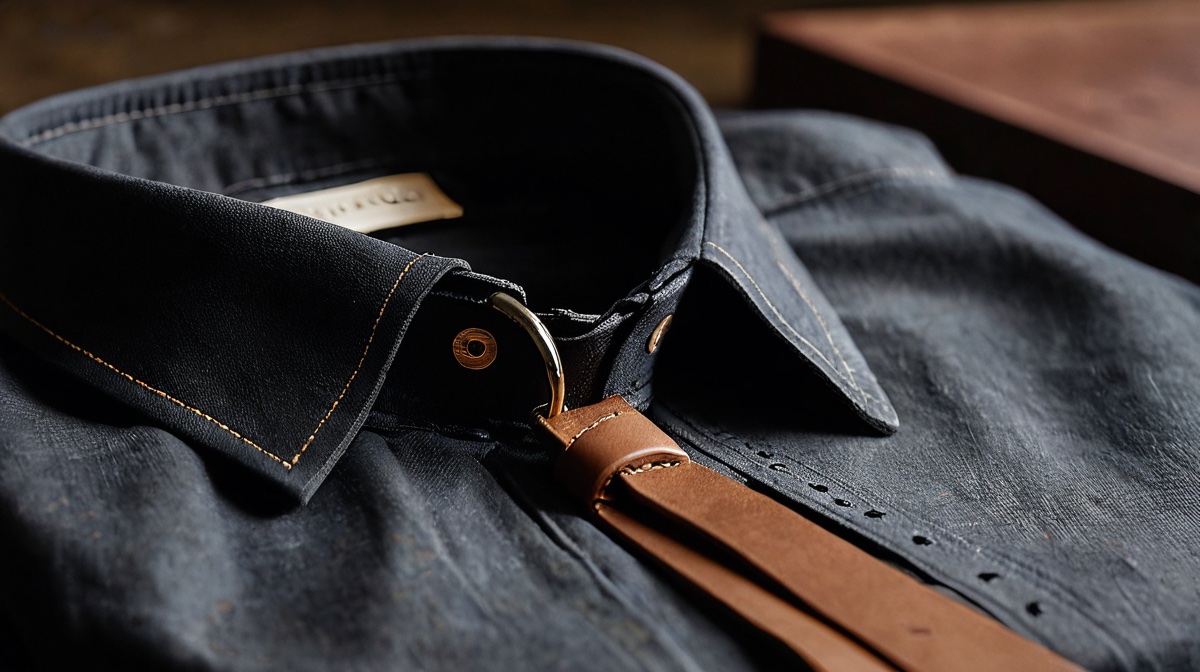
If you want a day collar that genuinely locks, think through real life first. A permanently fixed collar has to be removable quickly in a medical emergency, so keep a key accessible to someone you trust, and never rely on a piece you could not get off in a hurry. Airport security, dental work and hospital scans can all mean a collar has to come off at short notice.
None of this rules out a locking day collar. It just means the discreet, quickly removable designs tend to suit daily life better than a truly permanent one. Choose the level of permanence that fits your week, not just the fantasy of it, and the collar will still carry every bit of its meaning.
Questions people ask
What makes a collar a day collar?
Intent and discretion. A day collar is chosen for constant wear and styled so it reads as ordinary jewellery. The same fine chain that means nothing to a stranger can carry deep significance for the person wearing it, which is exactly the point.
How should a day collar fit?
Comfortably enough to forget. You should be able to slip two fingers between the collar and your neck, with no pinching and no marks left behind after a long day. Since it stays on for hours, comfort matters far more than it would for a piece worn briefly.
Are locking day collars a good idea?
They can be, but plan ahead. A permanently locked piece needs a way to come off quickly in a medical emergency, and it can complicate airport security or a hospital visit. Many people prefer a design that looks fixed but can be removed discreetly when life requires it.
Weighing up this kind of collar?
Fit and feel are personal, and people who already wear this type will tell you the parts a description leaves out. Ask before you commit.
Find people who wear it →