Leather collars: the comfortable classic that suits almost everyone
The most forgiving and versatile material for a collar, comfortable, characterful and easy to live with, and the type most people should try first.
Strengths
- Comfortable and warm against the skin from the first wear
- Enormous range of styles, weights and colours
- Softer feel makes it forgiving to size and to wear
- Ages with character when looked after
- Generally gentler on sensitive skin than cheap metal
Trade-offs
- Needs occasional care and dislikes staying wet
- Not suited to a truly permanent locked piece
- Quality varies widely, and cheap leather wears out fast
A leather collar is a collar made from leather, prized for being comfortable, warm against the skin and available in almost every style. It suits nearly everyone, from a discreet day piece to a sturdy play collar, and it is an easy first choice as long as you size it by the two-finger rule and give the leather a little care.
A leather collar is exactly what it sounds like, a collar made from leather, and it is the material most people picture first for good reason. Leather is warm, comfortable and forgiving. It comes in every style from a slim discreet band to a wide, ringed play piece, which is why it turns up across almost every type in the Catalog.
For most people, a leather collar is the sensible starting point and often the one they keep coming back to. It is comfortable enough to wear for hours, cheap enough to experiment with, and kind enough to sensitive skin that few people regret trying it. The care it needs is light, and the payoff is a collar that gets better with age.
Why leather is the default
Leather earns its popularity on comfort. It warms to the skin quickly, it has a little give, and a well finished edge sits kindly against the neck in a way a hard material struggles to match. That softness also makes it forgiving to size, since a small error is less punishing in leather than in rigid metal.
Variety is the other reason. Leather is worked into every collar style there is, thin or wide, plain or detailed, buckled or fitted with rings. Whatever job you have in mind, from discreet daily wear to a sturdy bondage collar, there is a leather version of it. That flexibility is hard to beat.
Who it suits
Leather suits almost everyone, which is why it is the usual first collar. It is comfortable enough for long wear, gentle enough for sensitive skin, and available cheaply enough to try before committing to something finer. Beginners in particular do well starting here.
The main exception is permanence. If you want a piece that stays locked on for the long term, leather is not the right tool, and a steel collar or a purpose-built eternity collar will serve you far better. For nearly everything else, leather is a safe and rewarding pick.
Grades, hardware and quality
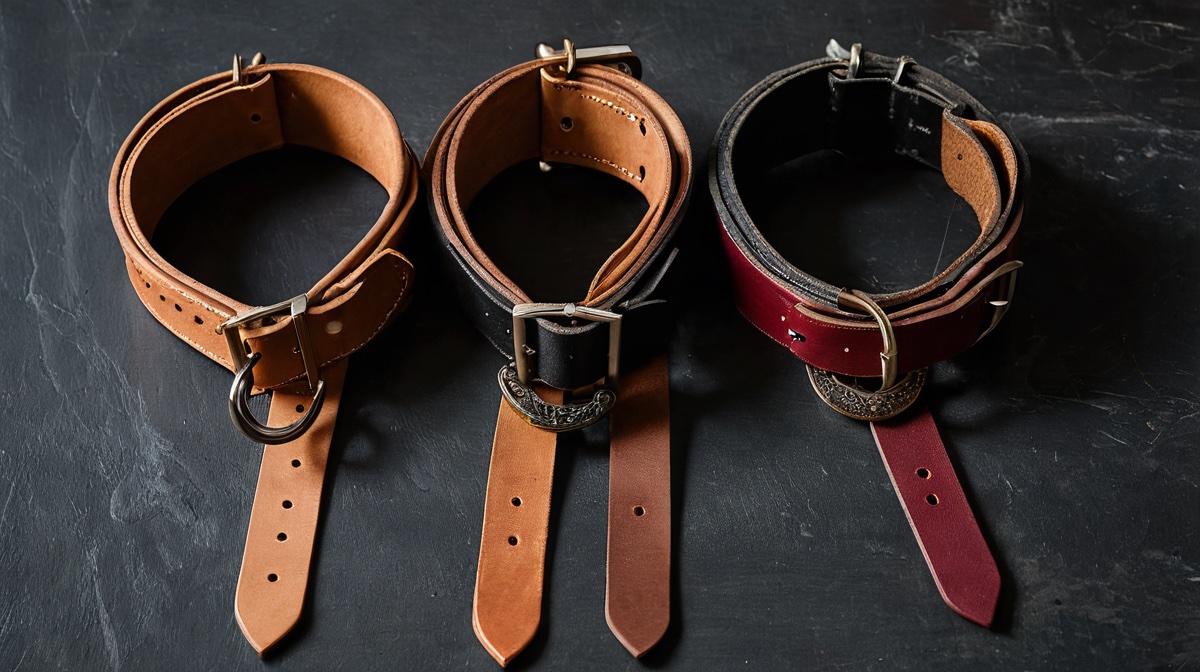
Not all leather is equal, and the price usually tells you why. Full grain and top grain leather are hard-wearing and age well. Bonded or heavily coated leather is cheaper and tends to crack, peel and wear out quickly, especially somewhere it flexes daily. If a collar is suspiciously cheap, the leather is usually the reason.
Thickness matters as much as grade. A slim day piece can be light and supple, while a collar meant to take a lead wants a thicker, firmer hide that keeps its shape under gentle tension without cutting into the neck.
Hardware matters just as much as the hide. A solid buckle, strong stitching and, on a play piece, well attached rings are what keep a leather collar trustworthy. Check the stitching is even and tight, and give any rings a firm tug. The metal parts can still contain nickel, so if your skin reacts, look for stainless steel fittings and check the material is stated.
Fit, care and skin
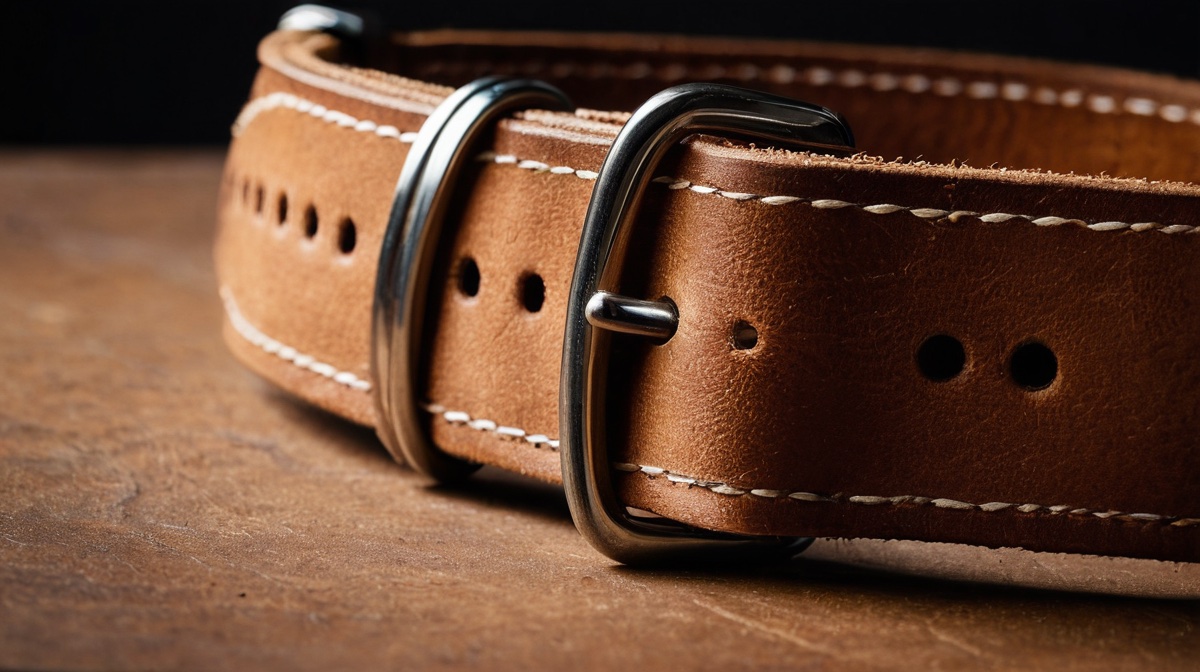
Fit follows the firm rule leather makes easy to hit: two fingers between the band and your neck, no pinching, no marks after a long day. Because leather has a little give and often several adjustment holes, dialling in a comfortable fit is simpler than with rigid materials. The collar sizing and fit guide covers measuring properly.
Care is light but not optional. Keep the leather dry where you can, condition it occasionally so it stays supple, and let it breathe rather than sealing it away damp. Give the skin underneath a rest if the collar ever feels wet, since trapped moisture is what irritates skin over time. A little attention keeps a good leather collar comfortable for years.
How to choose one
Match the leather grade to how hard the collar will work. A light day piece can be simple, while a collar you will pull a lead on wants full grain leather and solid hardware. Buying links should name the type of leather and show the stitching and fittings clearly, and vague descriptions usually hide bonded leather. If you are torn between materials, the leather versus steel collars guide lays out the trade-offs. For most people, most of the time, a well chosen leather collar is the comfortable, sensible answer.
Questions people ask
Why choose a leather collar?
Comfort and versatility. Leather is warm against the skin, softer than metal, and made in every style from a slim day piece to a wide play collar. That range and that comfort are why leather is the material most people find easiest to wear and the usual place to start.
How do I care for a leather collar?
Keep it dry where you can, condition it occasionally, and let it breathe. Wipe it down now and then, since anything worn against the skin picks up oils. Give the skin underneath a break if the leather ever feels damp, and store it somewhere cool rather than crushed at the bottom of a drawer.
Is leather or steel better for a collar?
It depends on the job. Leather wins on comfort, warmth and variety, and suits most everyday and play wear. Steel wins on durability and works better for permanent locked pieces. For a first collar, though, leather is usually the friendlier choice.
Weighing up this kind of collar?
Fit and feel are personal, and people who already wear this type will tell you the parts a description leaves out. Ask before you commit.
Find people who wear it →