Leather vs steel collar: which material suits you?
A leather collar is warm, flexible and comfortable for long wear, and it softens with age but needs conditioning. A steel collar is cooler, harder, very durable and permanent in feel, and it takes a high polish. Choose leather for comfort and warmth, steel for permanence and shine.
Leather and steel are the two materials most collars are made from, and they behave very differently. One is soft, warm and living; the other is hard, cool and lasting. Neither is better in the abstract. The right choice depends on how you want the collar to feel, how you plan to wear it, and how much care you are willing to give it.
This comparison runs through the honest trade-offs, so you can decide with your eyes open rather than by looks alone.
How each material feels to wear
Leather is warm to the touch and flexes with the body. It sits softly against the skin, moulds a little to the neck over time, and generally feels forgiving for long wear. Good leather is supple from the start and only grows more comfortable as it breaks in.
Steel is a different sensation entirely. It is cool against the skin, rigid, and unmistakably present. Many people find that solidity part of the appeal, since a steel collar makes itself felt in a way leather does not. It does not soften or mould, so the fit you buy is the fit you keep. If either of you reacts to certain metals, check the alloy, because nickel allergy is common and a reaction at the throat is thoroughly unpleasant. Surgical-grade stainless steel is usually the safer pick.
Durability and care
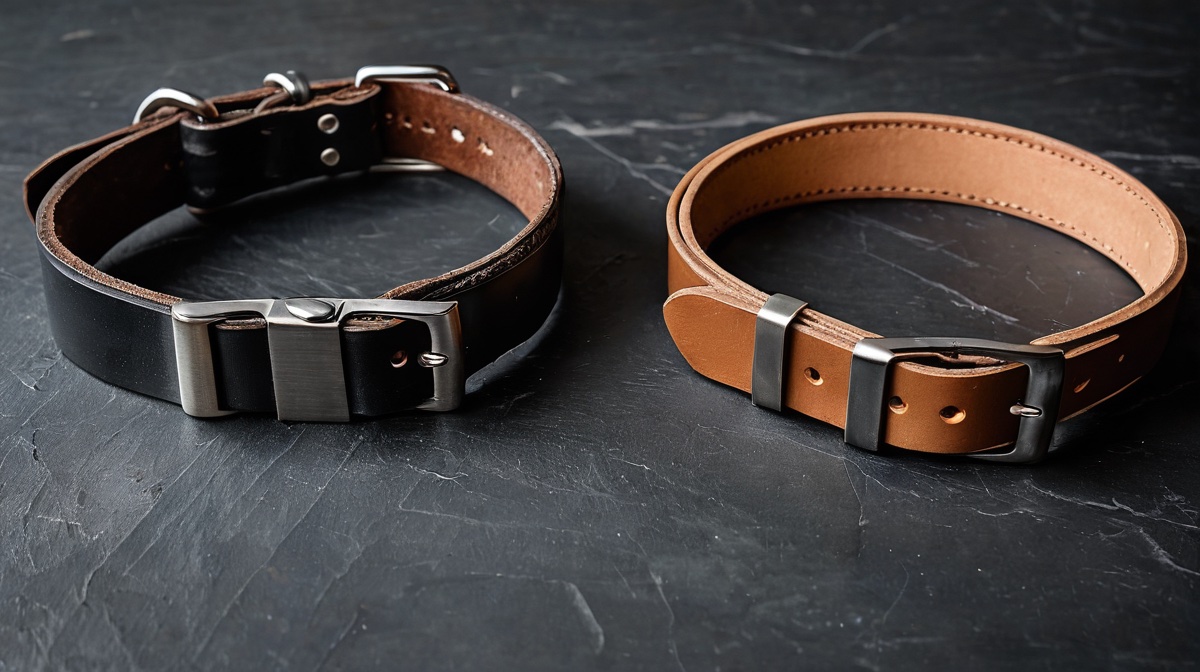
Both materials last, but they age in opposite ways. Leather is durable if looked after and fragile if neglected. It needs occasional cleaning and conditioning to stay supple, and it dislikes being soaked or left to dry out. Treated well it can last for years and develop a lovely patina; treated badly it cracks. Our guide to caring for a leather collar covers the routine.
Steel asks for far less. A wipe to remove marks and the occasional polish keeps it looking new, and it shrugs off moisture that would ruin leather. The hardware is part of the story for both, since buckles, rings and locks wear before the material does. We go through fittings in collar hardware explained.
Cost is worth a mention, since it varies widely within both materials. A simple leather collar can be very affordable, while fine hand-worked leather or a seamless steel piece costs a good deal more. Neither material is cheap or expensive by nature; the price tracks the craft, the fittings and the finish far more than the raw material itself.
Look, weight and permanence
Visually the two send different messages. Leather reads as warm, tactile and classic, and comes in a range of colours and finishes. Steel reads as sleek, serious and jewellery-like, catching light in a way leather cannot. Weight follows suit: leather is generally lighter, while steel has a reassuring heft to it.
There is also a middle ground many people overlook. Some collars pair a leather band with steel hardware, or a steel core with a softer lining, aiming for the comfort of one and the strength or shine of the other. If you cannot decide between the two, a well-made combination piece can be a sensible answer rather than a compromise.
Permanence is the deepest difference. A buckled leather collar comes on and off easily, which suits everyday and play use alike. A steel collar, especially a seamless locking eternity collar, can be made to stay on long term, which is why steel is a common choice for a formal, lasting piece. The leather collars and steel collars sections show the range of each.
Which should you choose?
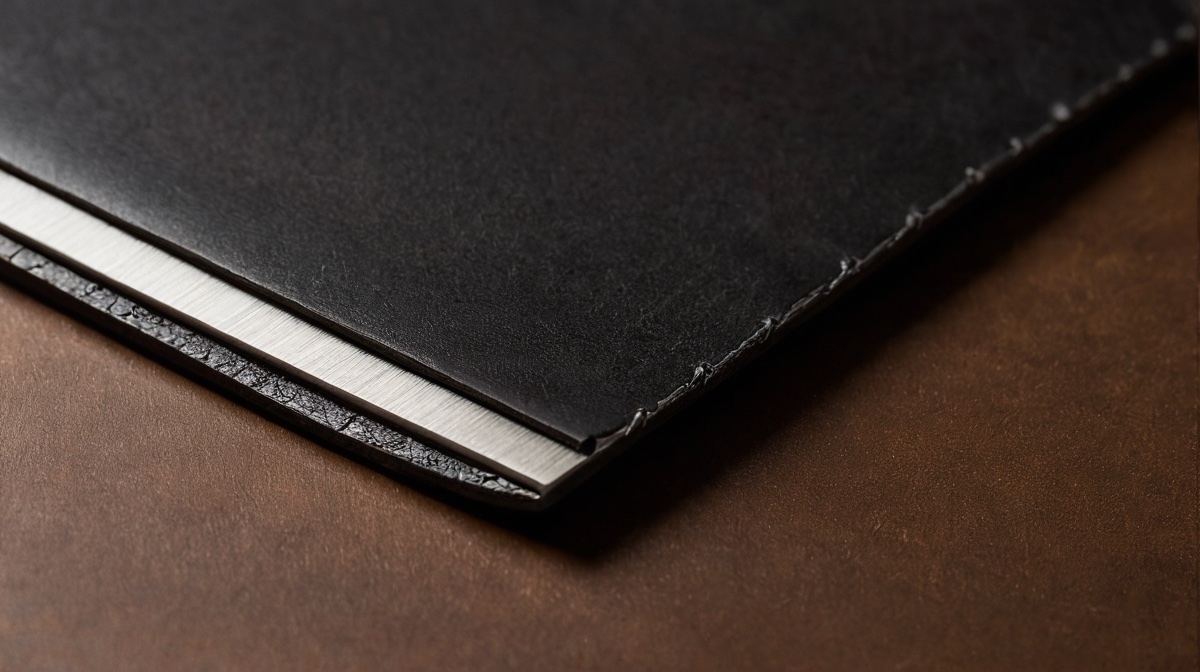
Choose leather if you want comfort, warmth, flexibility and easy daily wear, and you do not mind a little upkeep. It is the friendlier material for a first collar and for anything worn for long stretches at a time.
Choose steel if you want durability, minimal care, a jewellery-grade shine, or the permanence of a piece that stays on. Many people, in the end, own both and reach for whichever suits the day. If you are still weighing it up, our broader guide to how to choose a collar sets material alongside purpose, fit and budget, so the decision sits inside the bigger picture rather than being made on looks alone.
Questions people ask
Which is more comfortable, leather or steel?
Leather is usually the friendlier material for long wear. It is warm to the touch, flexes with the body, and moulds a little to the neck over time. Steel is cool and rigid, which many people like for its presence, but it does not soften or adjust to you.
Which needs more care?
Leather. It needs occasional cleaning and conditioning to stay supple, and it dislikes being soaked or dried by heat. Steel asks for far less: a wipe and the occasional polish keep it looking new, and it shrugs off moisture that would ruin leather.
Which is better for a permanent, long-term collar?
Steel, generally. A seamless locking steel piece such as an eternity collar can be made to stay on long term, which is why steel is a common choice for a formal, lasting collar. Buckled leather comes on and off easily, which suits everyday and play use.
Take it past the page
Guides give you the shape of it. People give you the rest: how they chose, how it fits, what a collar came to mean for them. Find others who wear one and are happy to talk.
Find people who share it →