Collar sizing and fit: how to measure and get it right
For collar sizing and fit, measure around the base of the neck with a soft tape, then choose a collar that closes with room to slip two fingers between the band and the neck. Prefer adjustable styles for a first collar, and never size a locking or heavy collar too tight.
Good fit is the difference between a collar you forget you are wearing and one you cannot wait to take off. It also happens to be the difference between a safe collar and an unsafe one. Sizing is not glamorous, but getting it right is the single most useful thing you can do before buying anything.
The method is short and worth following exactly. Measure properly, apply the two-finger rule, and lean towards adjustable styles until you know your number for certain.
How to measure your neck
Take a soft tailor’s tape and wrap it around the base of the neck, where a collar naturally sits, low and close to the shoulders rather than high under the jaw. Keep the tape snug but not tight, level all the way round, and read the number without pulling. That measurement is your starting neck size.
If you do not have a soft tape, wrap a strip of paper or a piece of string around the neck, mark where it meets, then lay it flat against a ruler. Measure twice, because a centimetre matters here. Note whether you want the collar to sit lower or higher, since position changes the reading. When in doubt, size for where the collar will actually rest.
It also helps to measure at a neutral time of day. Necks can change slightly with temperature, salt intake and the hour, so a reading taken first thing may differ a little from one taken late in the evening. If you land between sizes, favour the larger, since a collar can be taken in a hole or two far more easily than a tight one can be let out.
The two-finger rule
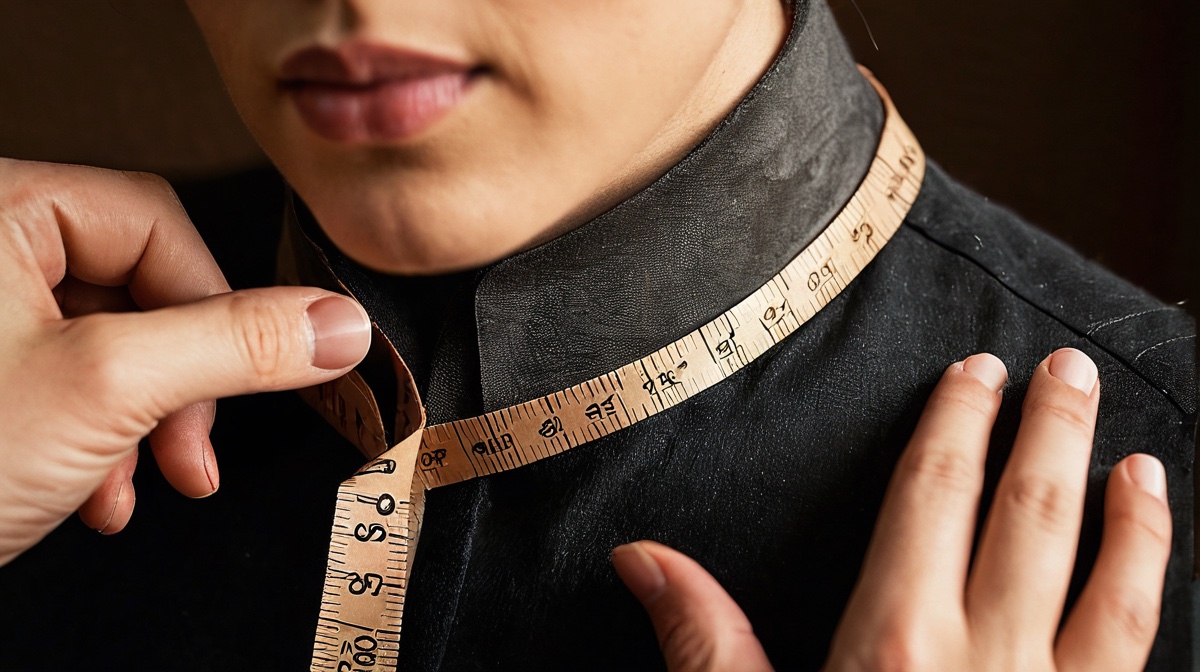
The two-finger rule is the standard fit check, and worth committing to memory. Once the collar is fastened, you should be able to slide two fingers flat between the band and the neck without forcing them. That gap gives room to breathe, swallow and move comfortably while keeping the collar from sliding around.
If you cannot fit two fingers, the collar is too tight and needs loosening or sizing up. If there is room for three or four, it is too loose and will ride, rub and turn. This check matters most on anything heavy or locking, where a poor fit is not merely uncomfortable but genuinely unsafe. It sits at the centre of our collar safety guide for exactly that reason.
Adjustment, buckles and holes
For a first collar, choose an adjustable style. A buckle with several holes, or a chain with sizing links, lets you fine-tune the fit and allows for the way necks change slightly through the day. A row of holes also means one collar can suit small changes over time.
Fixed-size collars, including many formal and locking pieces, are wonderful once you know your exact measurement, but they punish a guess. If you are ordering a fixed size, confirm the internal measurement rather than a vague label, and check whether the number is the full circumference or the neck size it is meant to fit. Our guide to how to choose a collar covers matching the fastening to the collar’s job.
Common fit mistakes and safety
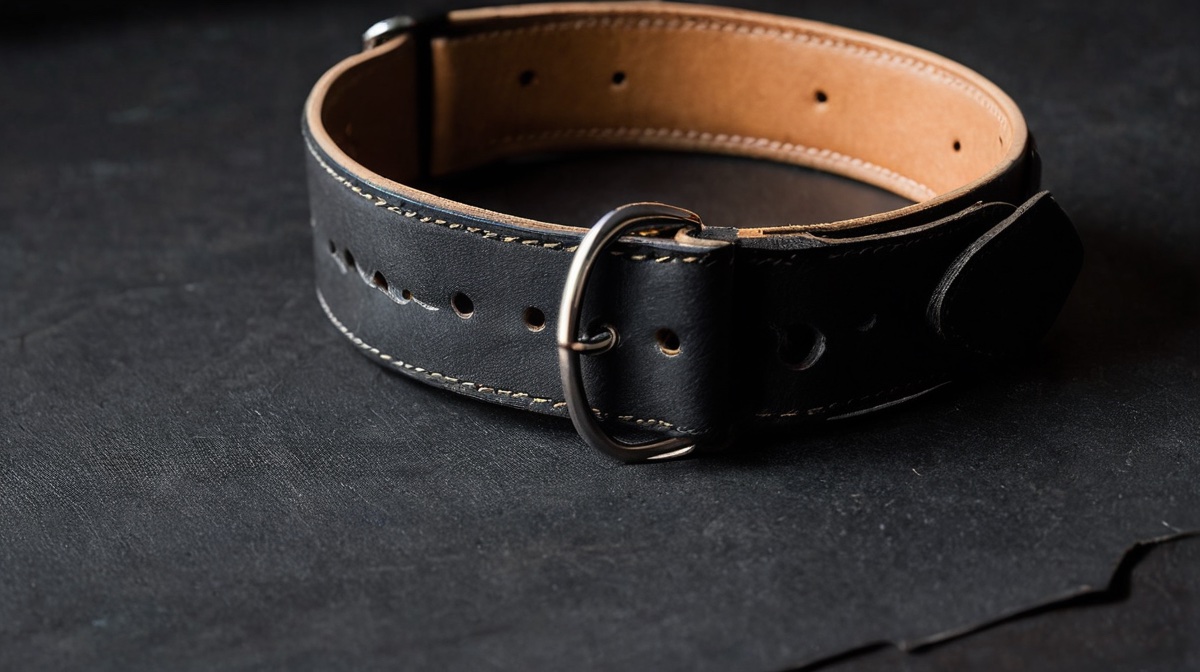
The most common mistake is sizing by eye and ordering too small, hoping a snug look is the goal. It is not. A collar that compresses the throat is dangerous, full stop. The second most common mistake is the opposite, a collar so loose it spins and chafes all day.
One more thing catches people out: the width of the band changes how a size feels. A wide collar at a given circumference sits more firmly and covers more of the neck than a narrow one at the same measurement, so a number that felt right on a thin chain may feel tight on a broad leather band. Size each style on its own terms rather than trusting one figure everywhere.
Different styles fit differently, too. A tall posture collar or a firm training collar holds the neck more definitely and must be sized with extra care, while a light day collar is far more forgiving. Whatever the style, never leave someone in a heavy or locking collar unattended, keep a release to hand, and treat any pinching, marking or difficulty swallowing as a clear sign to loosen or remove it at once. The full Catalog notes how each type tends to fit.
Questions people ask
How do I measure my neck for a collar?
Wrap a soft tailor's tape around the base of the neck, where a collar naturally sits, keeping it snug but not tight and level all the way round. If you have no soft tape, use a strip of paper or string, mark where it meets, then measure it flat against a ruler.
What is the two-finger rule?
Once the collar is fastened, you should be able to slide two fingers flat between the band and the neck without forcing them. Less room means it is too tight and unsafe; room for three or four fingers means it is too loose and will ride and rub.
Should a first collar be adjustable?
Yes. A buckle with several holes, or a chain with sizing links, lets you fine-tune the fit and allows for the way necks change slightly through the day. Fixed-size collars are wonderful once you know your exact measurement, but they punish a guess.
Take it past the page
Guides give you the shape of it. People give you the rest: how they chose, how it fits, what a collar came to mean for them. Find others who wear one and are happy to talk.
Find people who share it →