A history of the collar: from ancient status to the modern neck
The collar is very old, but its meaning has shifted. For most of history a band at the neck signalled status: rank, service, protection, or belonging to a household. Its modern use in BDSM, where a collar marks a freely chosen bond between partners, took shape only in the twentieth century, though it borrows the weight of that much older habit.
The neck is public. You cannot hide it the way you can hide a wrist or an ankle, and for most of human history that made it the natural place to show where a person stood. A band around the neck could be read at a glance, which is why so many societies put meaning there long before anyone wrote the practice down.
That is the honest starting point for any history of the collar. The object is ancient. The meanings attached to it are many, local, and often contradictory. Anyone who tells you there is one clean thread running from antiquity to a modern bedroom is selling a story rather than describing the record.
Rank, service, and protection in the ancient world
In several old civilisations a neck ornament marked status. A heavy metal band might signal high rank and wealth. A plainer one might mark service or belonging to a particular household. The same body part carried opposite meanings depending on the metal, the craft, and who was looking.
Protection sat alongside status. Amulets and torcs worn at the throat were meant to guard the wearer as much as to place them in a hierarchy. So even in the earliest examples the collar was doing two jobs at once, saying who you were and trying to keep you safe. Both ideas survive, in changed form, in what the collar means now.
Adornment and the coded piece

By the nineteenth century, neckwear in much of the world had become fashion first. Ribbons, velvet bands and lockets were worn close to the throat for their look. A piece like that could still carry a private message, a keepsake or a token from one person to another, understood only by the people who knew what it meant.
That quiet, coded quality matters for the story. It kept alive the idea that something worn at the neck could be intimate and meaningful without announcing itself to a room. The modern day collar, discreet enough to pass as ordinary jewellery, owes a great deal to this habit.
The collar enters the scene
The meaning most people recognise today formed in the leather subcultures of the mid-twentieth century. Here the collar became a chosen, negotiated symbol of a bond between partners in a power-exchange relationship. The person who wears it agrees to it, which is the sharp break from everything that came before.
This is where the older logic gets turned around. A historical collar was usually placed on someone to mark a status they did not pick. A modern one is accepted, often requested, and worn on purpose. The familiar shape carries a different engine now, and that engine is consent. If you want the practice built around that symbol, see our guide to the collaring ceremony.
What the collar means now
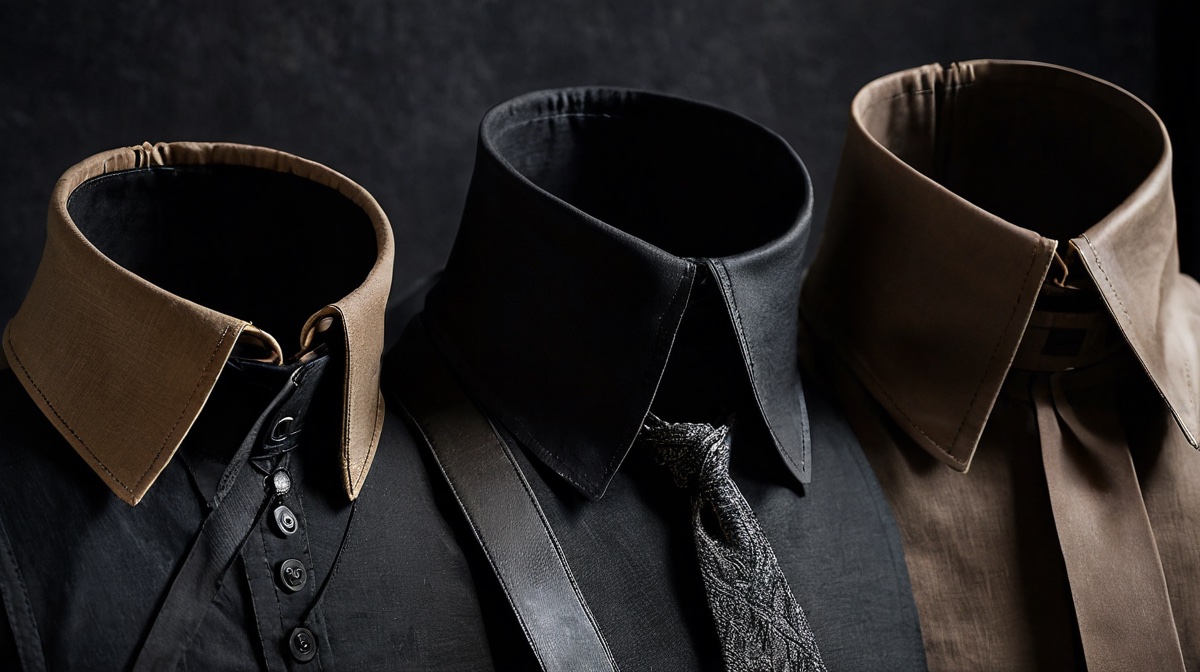
Today a collar can be almost anything the people involved decide. It might be a discreet day collar worn to work with nobody the wiser, or a formal piece kept for special occasions. Some are simple. Some are made to lock. The meaning lives in the agreement between two people, not in the metal.
Two threads from the deep past still run through it. The collar remains a way of showing belonging, and it still carries that old double duty of meaning something and needing to be safe to wear. A well-chosen modern collar honours both. For how the types differ in practice, the whole Catalog breaks them down one by one.
History gives the collar its weight. What it does not give is a rulebook. The modern practice took an ancient symbol and rebuilt it around choice, and that is the part worth remembering.
Questions people ask
How old is the collar as a symbol?
Bands and ornaments worn at the neck appear across many ancient cultures, so the object itself is thousands of years old. What is recent is the specific meaning it carries in BDSM. Treat claims about a single unbroken tradition with caution, because the honest record is patchy and local rather than one clean line.
Where does the BDSM collar come from?
The meaning most people recognise today, a negotiated bond worn on purpose, took shape in the leather subcultures of the mid-twentieth century. Earlier symbolism around the neck fed into it, but the modern practice is its own thing, built on consent rather than status handed down.
Is the modern collar the same as a historical one?
Not really. A modern collar is chosen by the person who wears it, which flips the older meaning on its head. The shape is familiar, the logic behind it is different, and that difference is the whole point.
Take it past the page
Guides give you the shape of it. People give you the rest: how they chose, how it fits, what a collar came to mean for them. Find others who wear one and are happy to talk.
Find people who share it →