Posture collars: tall, firm, and not a beginner's first collar
A striking, demanding piece that holds the head high and the neck still. Wonderful for the right person in short, supervised sessions, but the fit and safety margins are tighter than any other collar, so it earns its middling score on caution rather than quality.
Strengths
- Creates a dramatic, upright posture that many find powerful
- Firmly limits head movement, which is the whole appeal for some
- Well-made leather versions are beautiful and surprisingly comfortable at first
- Excellent for short, focused, supervised scenes
Trade-offs
- Restricts movement in ways that demand real safety awareness
- Poor fit can press on the throat, which is never acceptable
- Not suited to long wear, sleep, or being left on unattended
- A bad choice for a first collar or for solo, unsupervised use
A posture collar is a tall, stiff collar that holds the chin up and sharply limits head movement. It is prized for the upright posture and the feeling of firm control it creates. Because it is restrictive and sits against the throat, fit and supervision matter more here than with any other collar, and it is best kept to short, attended sessions rather than all-day wear.
A posture collar is the tall, firm one. Where a day collar disappears into your outfit, a posture collar is built to be felt: it rises high on the neck, cups under the chin, and holds the head upright with very little give. For the people who love it, that combination of a forced, elegant posture and a strong sense of being held is the entire draw.
It is also the most demanding collar to wear well. The same height and rigidity that create the effect also sit right over the throat, so the margin between “firm and thrilling” and “too much” is narrower than with any other type. That is why this breakdown spends more time on safety than on style. With a posture collar, the safety is the style done properly.
What it does and who it suits
The design works by physically limiting movement. A good posture collar makes it hard to nod, hard to turn the head far, and hard to look down. The wearer is held in an upright, presented posture, and that restriction is the point rather than a side effect. Many people describe the feeling as intensely focusing.
It suits someone who already knows how their neck responds to being collared and who wants a stronger, more restrictive experience for a scene. It is a wonderful piece in the right hands. It is a poor first collar, and a poor choice for wearing while distracted, drowsy or alone. If you are new, start with the gentler types in the Catalog and build up to this one.
Fit is a safety issue here
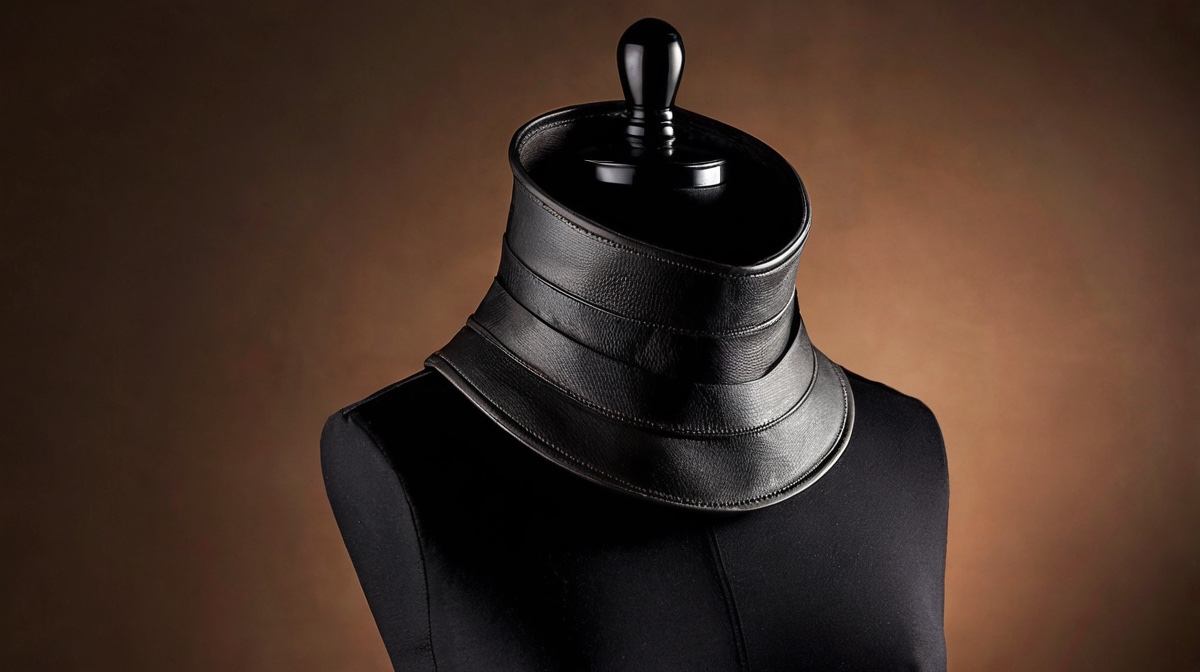
With most collars, a bad fit is uncomfortable. With a posture collar, a bad fit can be dangerous, so treat sizing as a safety step rather than a style choice. The firm rule still applies: you must be able to slip two fingers between the collar and your neck, and the collar must never press on the windpipe at the front of the throat.
Breathing and swallowing should stay easy the whole time it is on. If either becomes an effort, the collar is too tight or too high, and it needs to come off. A well-made leather posture collar can feel comfortable for a short while even though it is firm, and that is the standard to aim for. Discomfort that grows the longer you wear it is a signal to stop, not a phase to push through.
Wearing it safely
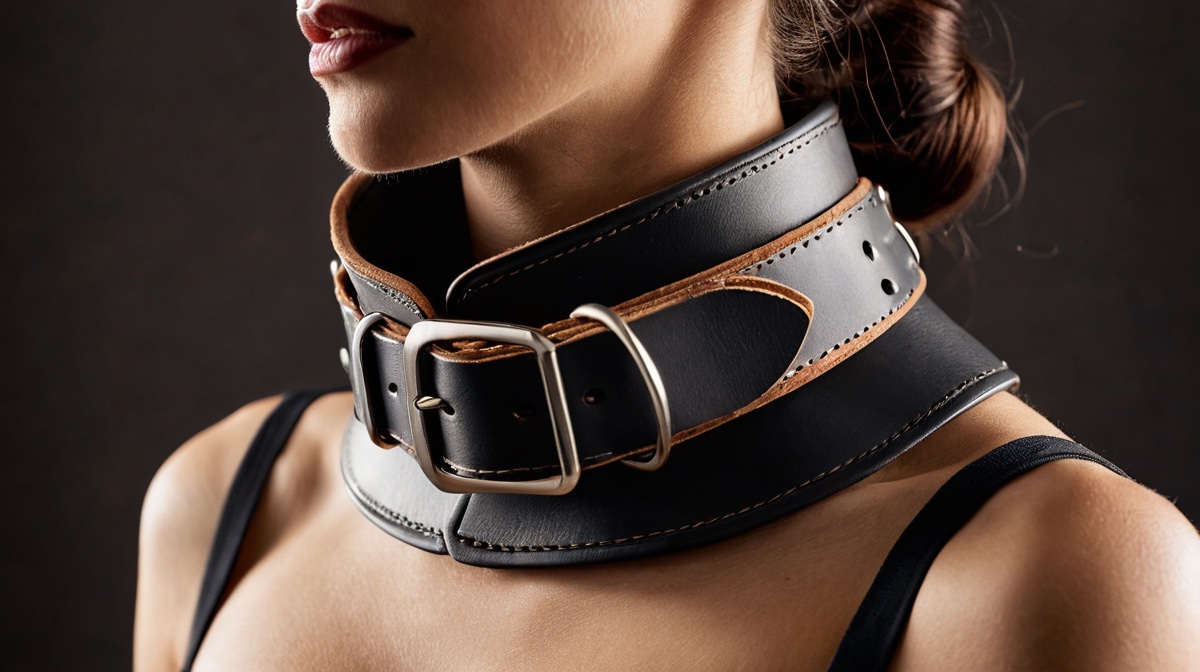
Keep sessions short, especially while you are learning what your body tolerates. A posture collar is not made for long wear, for sleeping, or for being left on while attention drifts elsewhere. Never leave anyone in a restrictive or locked collar unattended, and if the piece locks, keep the key or a quick-release within immediate reach so it can come off in seconds.
Watch for the warning signs and act on them without hesitation: dizziness, any difficulty breathing or swallowing, numbness, a change in skin colour, or pain that is sharp rather than a dull firmness. Any of those means the collar comes off straight away. None of them is something to wait out.
For play specifically, favour a design with a genuine quick-release, and agree a way for the wearer to signal that they need out even when speaking is awkward. The restriction is the appeal, so the way out has to be reliable and fast. Handled with that respect, a posture collar is a remarkable piece. Handled carelessly, it is the one type where a shortcut can cause real harm, and it is worth being honest about that.
Questions people ask
What does a posture collar actually do?
It is tall and rigid, so it cups under the chin and along the jaw and forces the head upright. That limits how far you can nod, turn or lower your head. The effect is partly physical and partly a strong sense of being held, which is what draws people to it.
Is a posture collar safe?
It can be, with care. The rules are stricter than for other collars: it must never press on the windpipe, you should still be able to breathe and swallow easily, and it should be worn for shorter, supervised periods only. Remove it at once if you feel any dizziness, breathing difficulty, numbness or real pain.
Should a beginner start with a posture collar?
No. Its restriction and tight fit margins make it a poor first collar. Start with a comfortable day or play collar, learn how your neck responds to being collared, and come to a posture piece later, ideally with an experienced partner present.
Weighing up this kind of collar?
Fit and feel are personal, and people who already wear this type will tell you the parts a description leaves out. Ask before you commit.
Find people who wear it →